Hanzala Chaudry

HanzalaChaudry

I build things for businesses. Software, mostly, though it has ended up including 3D-printed hardware, a house full of lighting, and whatever else the job turned out to need.

I run Titanium, a review platform I designed and sell to hospitality operators around the UK. Alongside it I take on a few outside projects a year.

Hanzala Chaudry
Chigwell, Essex
What I do

What I'd happily be judged on

AI that runs unattended

I build things on Claude that work without anyone watching them. The ones inside Titanium draft replies to customer reviews in a brand's own voice, check they haven't reused phrasing from somewhere else on the profile, and boil a week of feedback down to something an owner can act on. I score every version against a fixed set of test cases, because otherwise you are guessing whether a change helped.

  • Claude API
  • Agent pipelines
  • Evaluation harnesses
  • Automation

Software that fits the business

Most places I walk into are paying for four tools that each do about 60% of what they need, and a person somewhere is filling the gap with a spreadsheet. Sometimes the answer is one thing built properly. Dashboards, client portals, integrations, internal reporting: the unglamorous software a company actually runs on.

  • TypeScript
  • React
  • Cloudflare
  • SQL
  • Stripe

Parts you can hold

I model in CAD and print. Titanium's stations and table pucks are mine, and so is the label holder further down this page. When a physical process is slow because the right object doesn't exist yet, that is usually fixable in an afternoon, and almost nobody thinks to try.

  • CAD
  • 3D printing
  • Enclosures
  • NFC
  • Short runs

Buildings off dead vendors

Proprietary building systems fail, and the standard quote is to rip everything out and start over. I do the other version: keep the wiring, swap the brain, move the property onto something open that no supplier controls. Home Assistant, a Zigbee mesh built per site, and labelling careful enough that whoever comes after me isn't guessing.

  • Home Assistant
  • Zigbee
  • Lighting control
  • Networking

Property, read as an asset

I grew up on site with my father's investments and have been round enough buildings mid-refurb to see the work rather than the finish. Since then I've sourced and packaged deals that investors went on to buy, and worked refurbs on our own: layout, spec, and where money shows against where it quietly disappears. The Leyton job below came in as a lighting fault and turned into a refurb, which is usually how it goes.

  • Deal sourcing
  • Packaging
  • Refurb spec
  • Design decisions
Work

The ones worth showing

The house that ran on emergency lighting

HomeKit Harmony · Leyton · Sep 2025

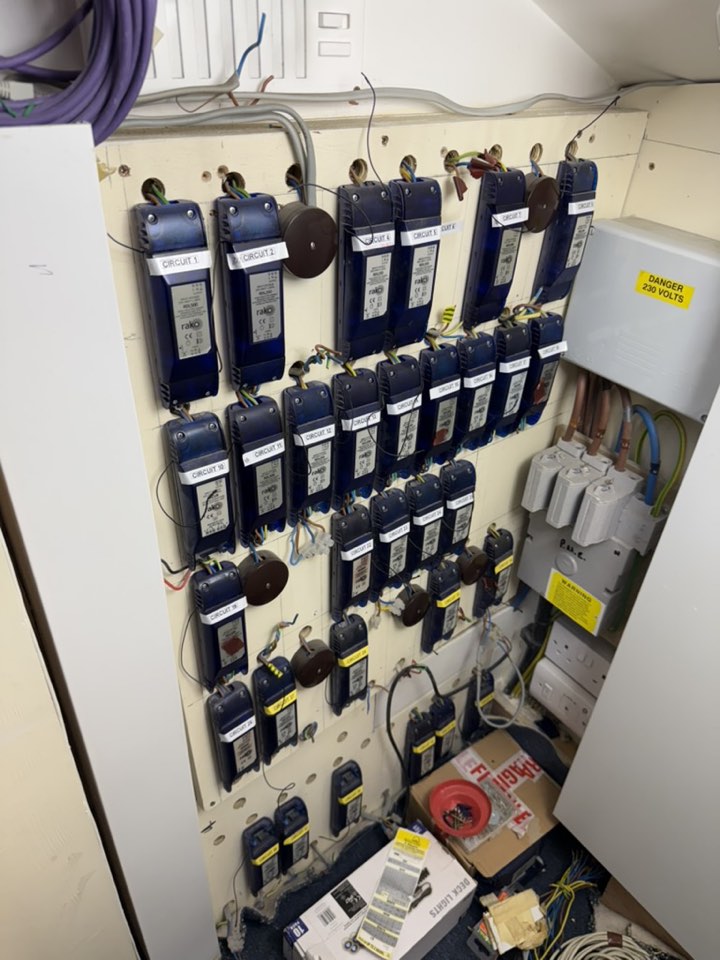
A house in Leyton ran its lighting on Rako, a proprietary control system. Thirty-odd circuits, every light in the building behind it. Then it died.

Nobody would take the repair on. A dead proprietary system with no surviving documentation is awkward, unglamorous work, and the safe quote is always to rip it out and start over. So it sat. The owner, an elderly man, lived off the emergency lighting instead. For years.

A wall of failed blue Rako lighting control modules, more than thirty circuits, with loose wiring and boxes of spare parts on the floor
Before · every circuit dead
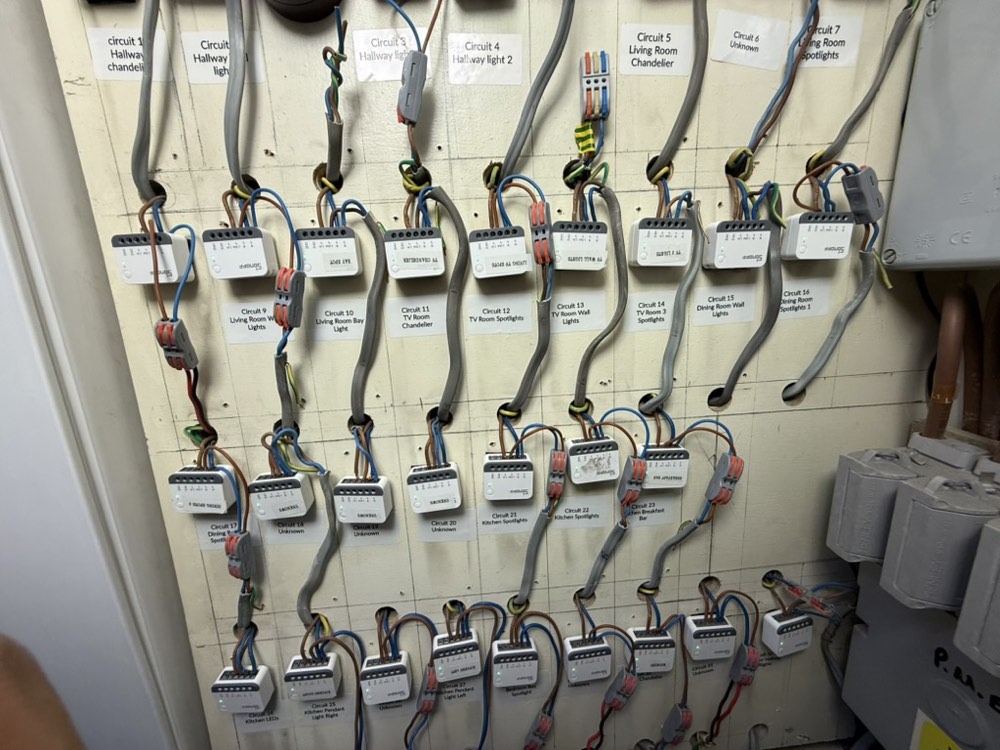
The same wall rebuilt with white Zigbee relay modules, wired through lever connectors, each circuit labelled with the room it controls
After · labelled by room

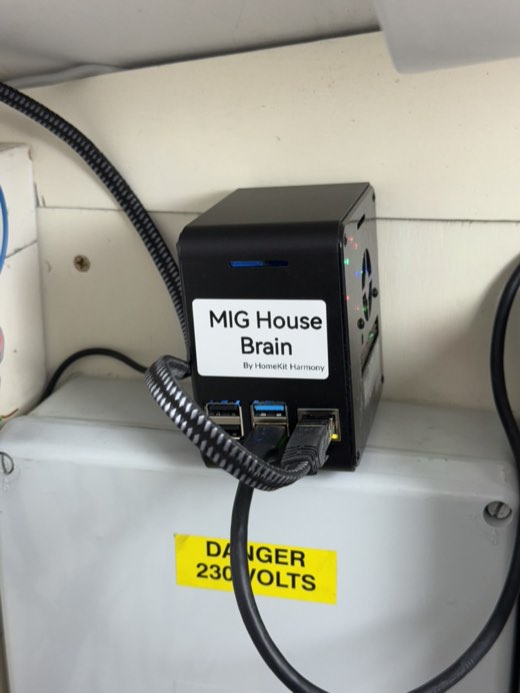
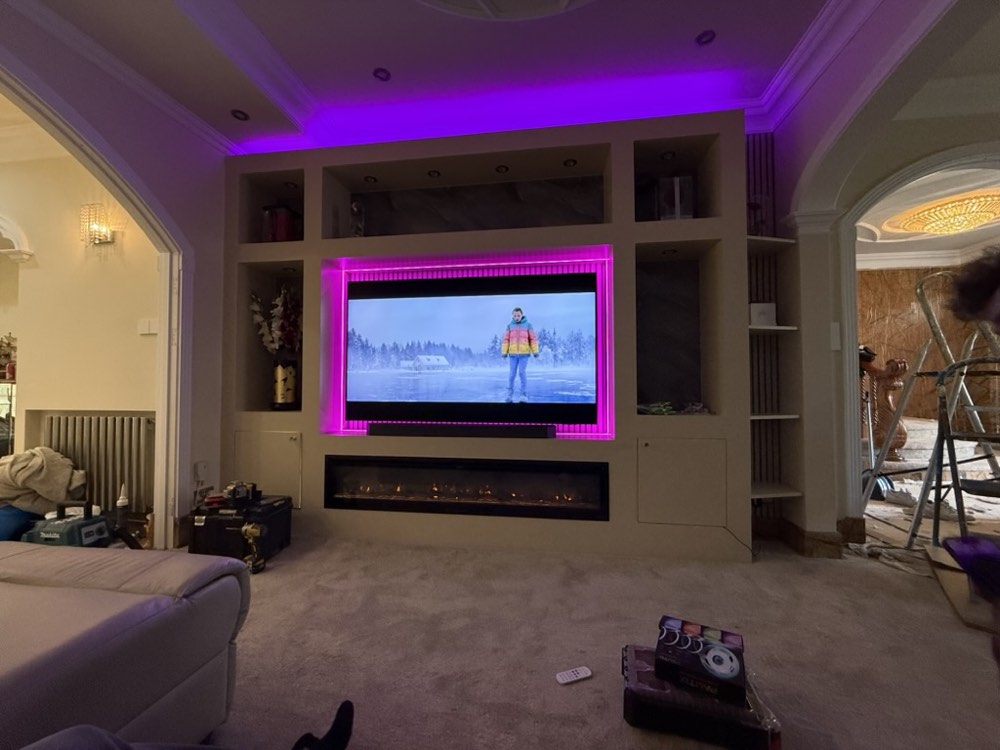
I kept the wiring and replaced the brain. Every dead Rako module came out and a Zigbee relay went in on the same circuit, each one labelled with the room it actually controls: hallway chandelier, living room bay, kitchen pendants. The original paperwork was long gone and I wasn't going to leave the next person guessing. A Raspberry Pi running Home Assistant took over as the controller. I put in gigabit Wi-Fi so the mesh had something solid underneath it, then built the media wall in the living room and brought that onto the same system.

A Raspberry Pi in a black case mounted above the consumer unit, labelled MIG House Brain by HomeKit Harmony
The controller, labelled and handed over
A finished media wall with a large television, magenta backlighting, cove lighting and a linear fireplace, in a large period room
Media wall, built and brought onto the same system
  • ReplacedRako, circuit by circuit
  • Runs onHome Assistant, self-hosted
  • Also deliveredGigabit Wi-Fi, media wall

The house came back. It runs on open standards now, so no supplier can switch it off again, and not one circuit had to be rewired.

It started as a system I built for my own home.

Titanium

Founded 2026 · Live

Titanium is a review platform for hospitality that runs on hardware I make. Someone taps a station on the counter. If they're happy they go to Google; if they're not they reach the owner privately while they're still in the building, with the Google link on screen either way. Behind it sits a dashboard for every site: league tables, complaint themes, drafted replies, a weekly report you can read in two minutes.

I built all of it on my own. Hardware, platform, AI, payments, contracts, and the selling.

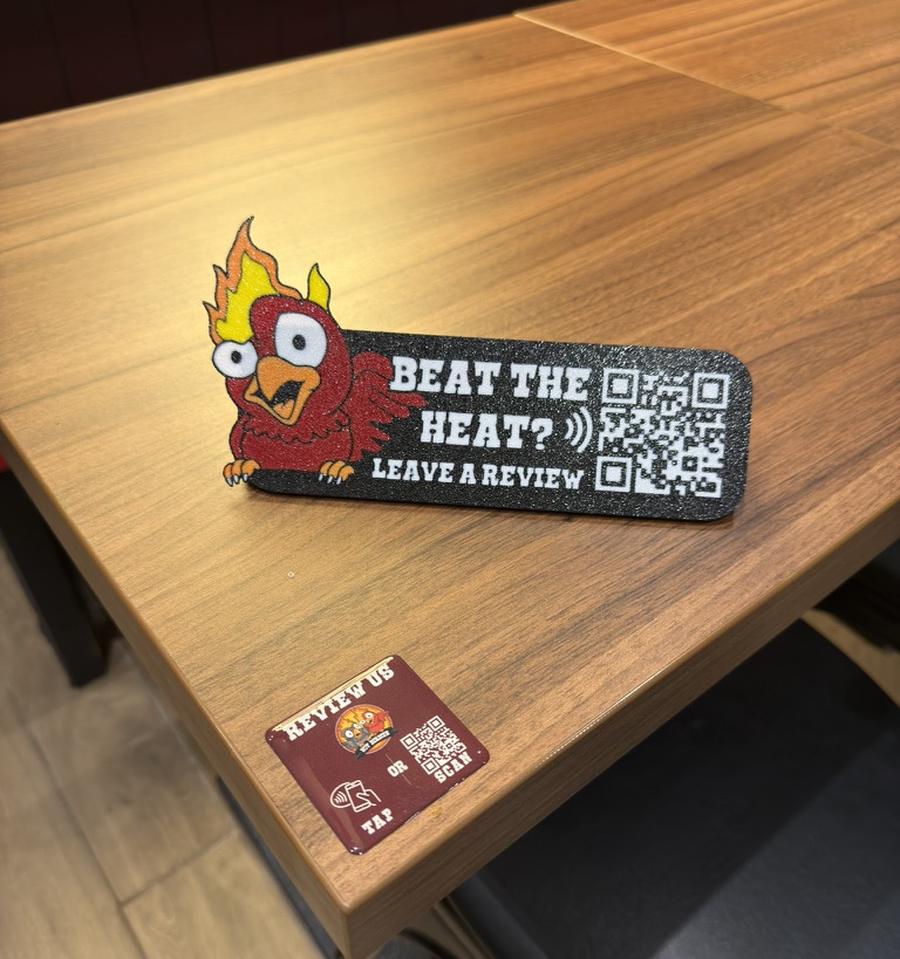
A 3D-printed table talker and a smaller table puck, both custom-branded for a restaurant, sitting on a wooden table
Designed and printed per client, no supplier logo
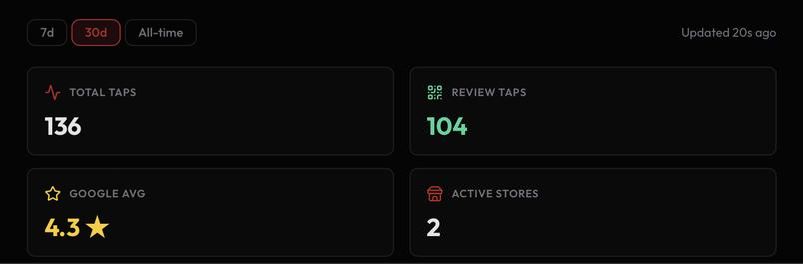
Dashboard tiles showing total taps, app taps, review taps, average Google rating, negative feedback count and active stores
What an operator sees on a Monday

One owner ran two branches side by side for five weeks. The one with Titanium went from 3.1 to 4.2 stars and grew its reviews by 106%. The other grew 5%.

A single comparison between two sites, not a network average.

titanium-reviews.com

Taking a conservatory off the back of a house

Extension & refurb

A dated conservatory on the back of a semi, used mostly as somewhere to put things, came off. A proper extension went on in its place: foundations dug, cavity walls up, the back of the house opened out into one room.

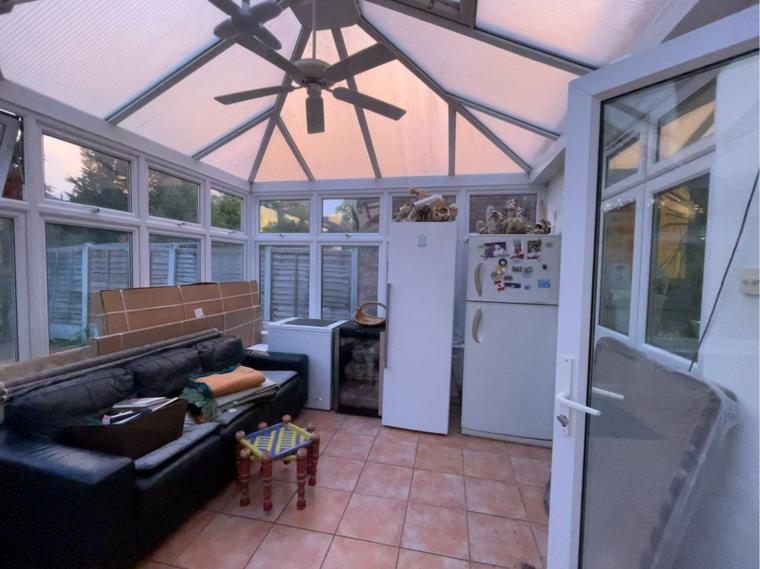
A dated uPVC conservatory with a pitched polycarbonate roof, tiled floor and an old sofa, being used for storage
What was there
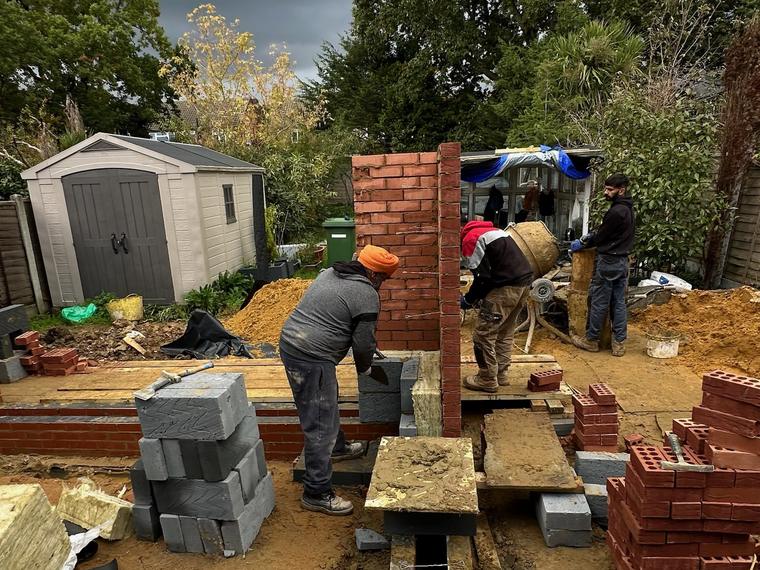
Groundworks in progress: trench foundations, a bricklayer working on a new pier, blockwork stacked and a cement mixer running under a dark sky
Foundations and cavity walls
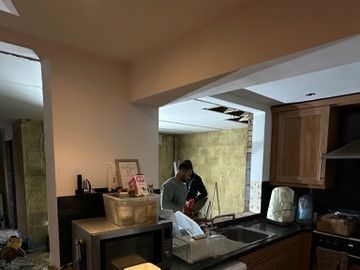
The original kitchen before work: dated wooden units, dark worktop and a damaged ceiling
The old kitchen

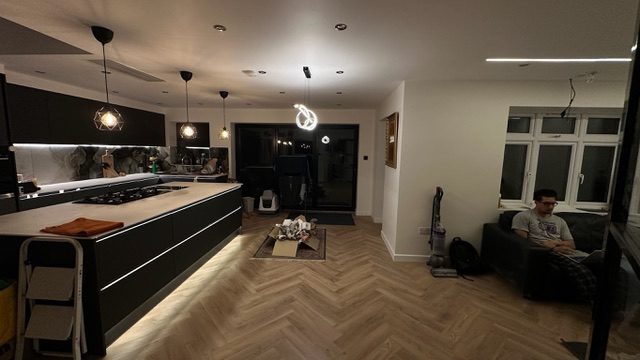
Brickwork is the straightforward part. What the job actually turns on is the set of decisions before it. Where the island sits settles where everyone ends up standing. The lighting has to work at seven in the morning and at nine at night, which is two schemes rather than one. And a herringbone floor either reads expensive or reads like a mistake, depending entirely on how the run meets the units.

The finished open-plan kitchen: matte black handleless units, a large island with integrated hob, stone worktop, herringbone floor, pendant and recessed lighting
Where the conservatory used to be

Those were the calls I was in, not just on site for.

A label holder nobody asked for

Joe & The Juice

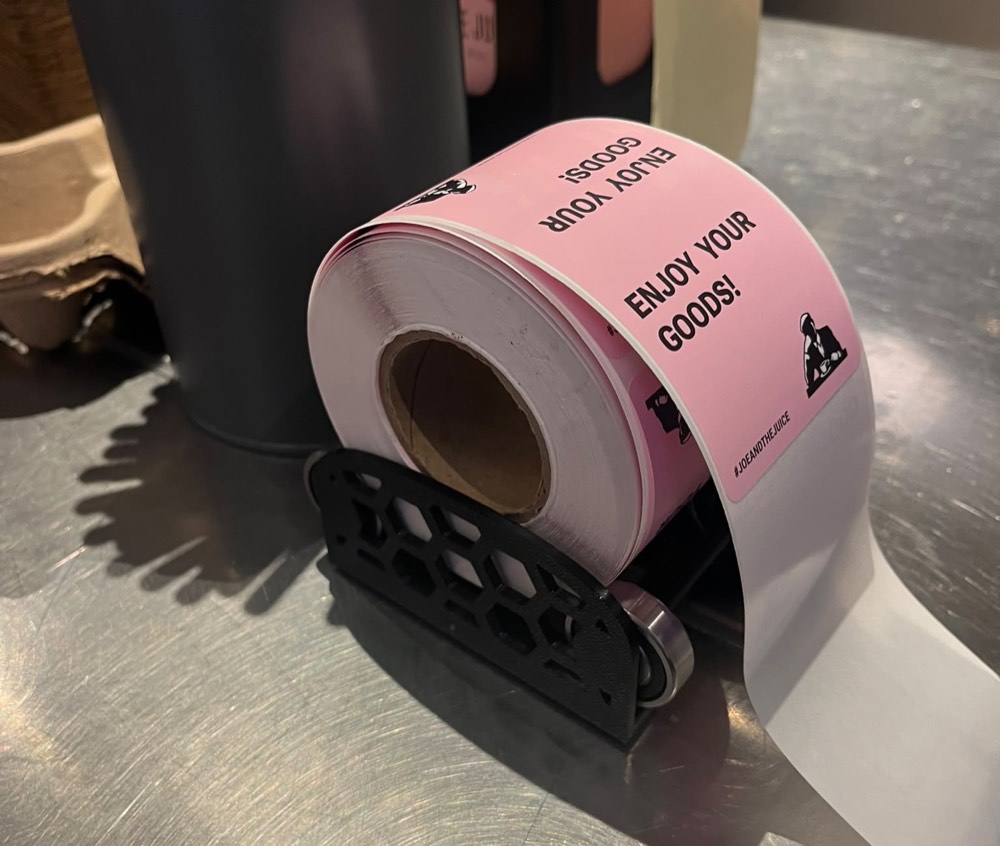
Packing delivery orders was slower than it needed to be because the label rolls tangled and fed badly. Nobody had raised it. That was just how the station worked. I modelled a mount that carries the roll on a bearing so it pays out flat, printed it, and put it on the pass.

A 3D-printed black roller mount with a hexagonal lattice frame, holding a pink label roll on a bearing so the labels feed out flat across a steel counter
Modelled, printed, in service that week

It cost about a fiver and nobody had asked for it. It's on this page because it's the most honest picture of how I work.

A funded trading account

Kortana FX · 2024–2026

I passed a $100,000 funded challenge under tight drawdown limits and traded it for two and a half years. Mostly gold and FX, technical structure read against macro catalysts, with risk tooling I wrote myself and a journal behind every position.

It's here for what it says about temperament rather than skill. Sizing a position, holding a drawdown limit when you don't want to, and going back over your own decisions honestly are the habits any business wants from someone near its numbers.

Clients

What they say

All Titanium customers. It's the only work of mine that enough people have bought to have opinions about.

“It just sits on the counter and runs itself. We get reviews every week without having to ask anyone. When a customer isn't happy, they tell us instead of going online. It's paid for itself.”
Joseph KallmanOwner, Clay and Bean
“I had a custom NFC tag made in the shape of a steak for my business, and it's honestly been a brilliant addition. The design is eye-catching and fits perfectly with my brand.”
VeliOwner, The Family Butchers
“We were getting one-star reviews from customers who'd never said a word to us first. Now they tap the stand and message us instead. Our rating's up a lot in a few weeks.”
MoOwner, T'z Peri Peri
Background

How I got here

Working together

How this usually starts

I take on a handful of projects a year alongside running Titanium, so I'd rather be honest early about whether something is a fit.

Smallest

A diagnostic

One problem, fixed scope, ending in a short written answer and a plan you could hand to someone else. No retainer and no obligation to carry on with me.

Most often

A build

Something specific needs to exist. I scope it, quote it, build it, and hand it over working. Fixed price against an outcome we agree up front.

Ongoing

A standing arrangement

For businesses with nobody technical in the building: a set number of days a month from someone who can make the decision and then go and do it.

Contact

Tell me what you're dealing with

Twenty minutes on a call, no pitch. I'll say whether I'm the right person for it. Fairly often I'm not, and I'll tell you who is.